Building the Future of Finance in Medellín: Highlights from the Open Payments Hackathon

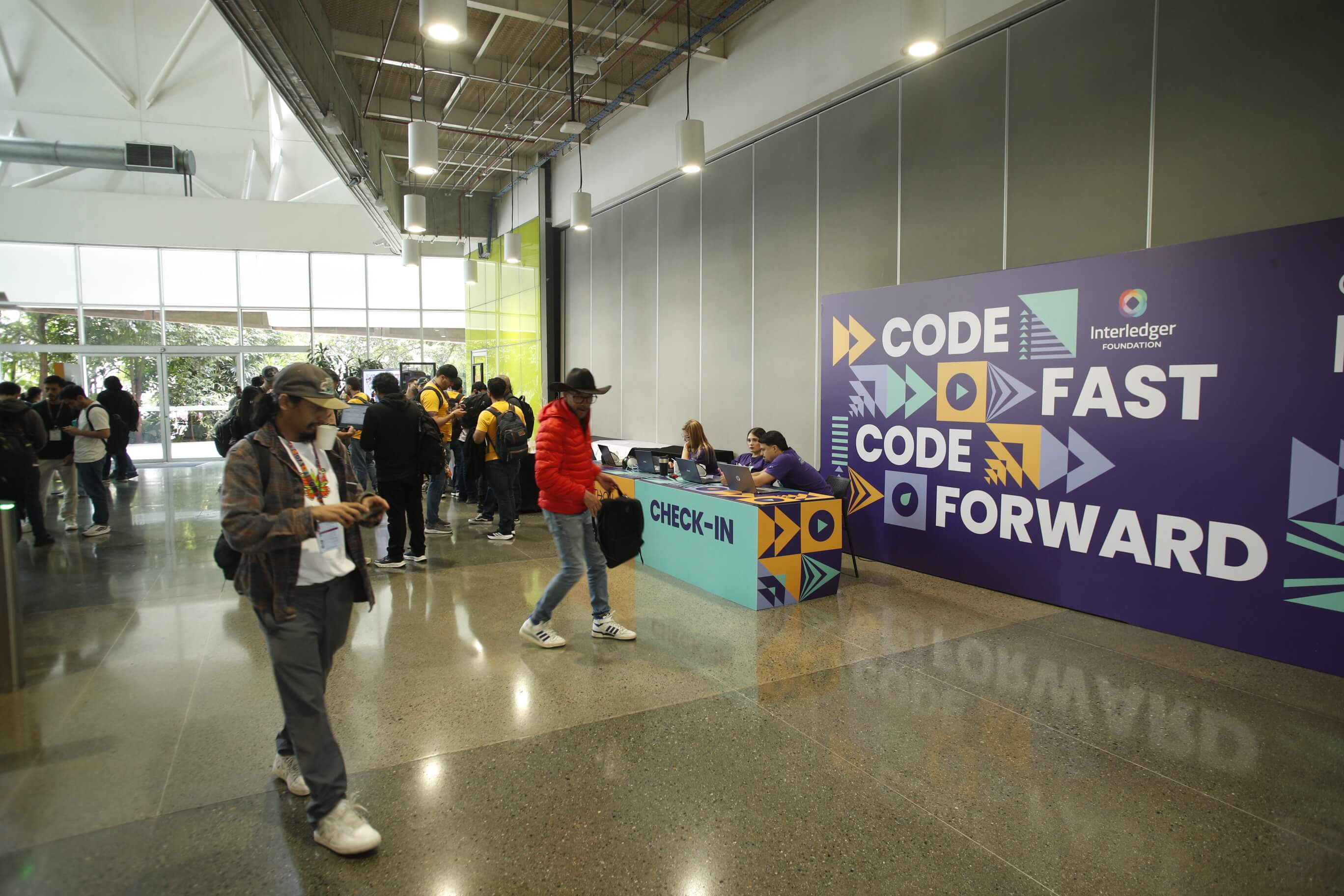
What does it take to build a financial system that works for everyone? In Medellín, 150 developers spent two days answering that question in code.
The Open Payments Hackathon, held in partnership with Ruta N (opens in a new tab), supported by ACI and the City of Medellin, was the culmination of almost a year of work with Colombia’s fintech ecosystem. Throughout that year, our goal was simple: show the role Open Payments can play as part of the country’s financial infrastructure. The hackathon was where that conversation turned into working products.
Two days, 150 developers, one open API
Over two days, participants dove into the Open Payments API with one brief: build the future of finance. Specifically, they were asked what would make payments more innovative, more impactful and more inclusive.
Each award category was sponsored by an industry partner, a sign of how seriously Colombia’s financial sector takes the push towards a fairer ecosystem. For the teams, it meant building with real-world problems in mind and getting feedback from the people who work on them every day.
A nail-biting final
Every team pitched its solution to panels of industry judges, and after a tense round of judging, 13 teams made it through to the final. There they presented to a panel from FIND EAFIT, Ruta N, Puntored and This Week in Fintech.
The winners are:
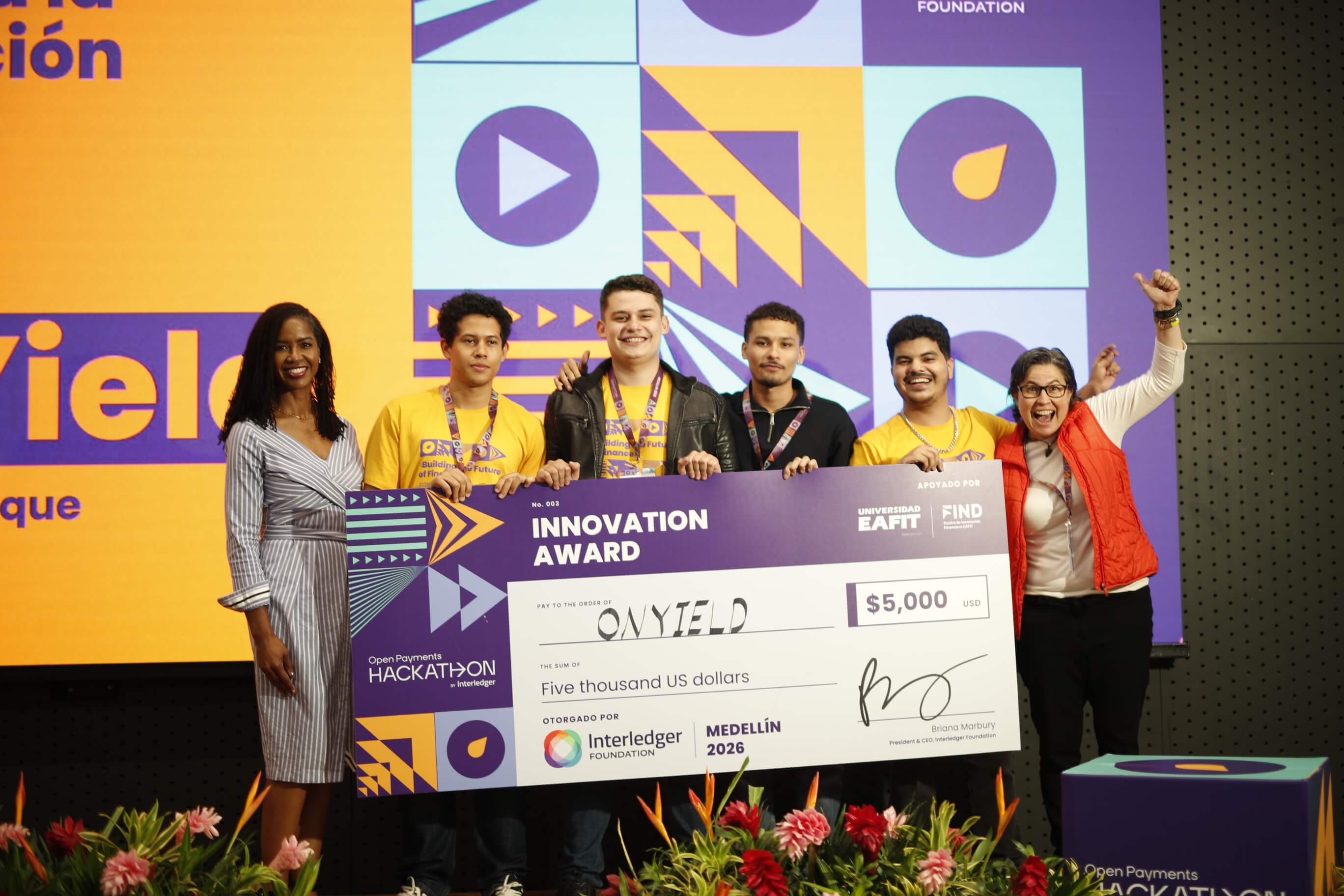
Innovation Award winners: OnYield
The team developed Pago Al Toque, using NFC cards and standard Android phones to enable touch-and-sound payments for people with visual impairments.
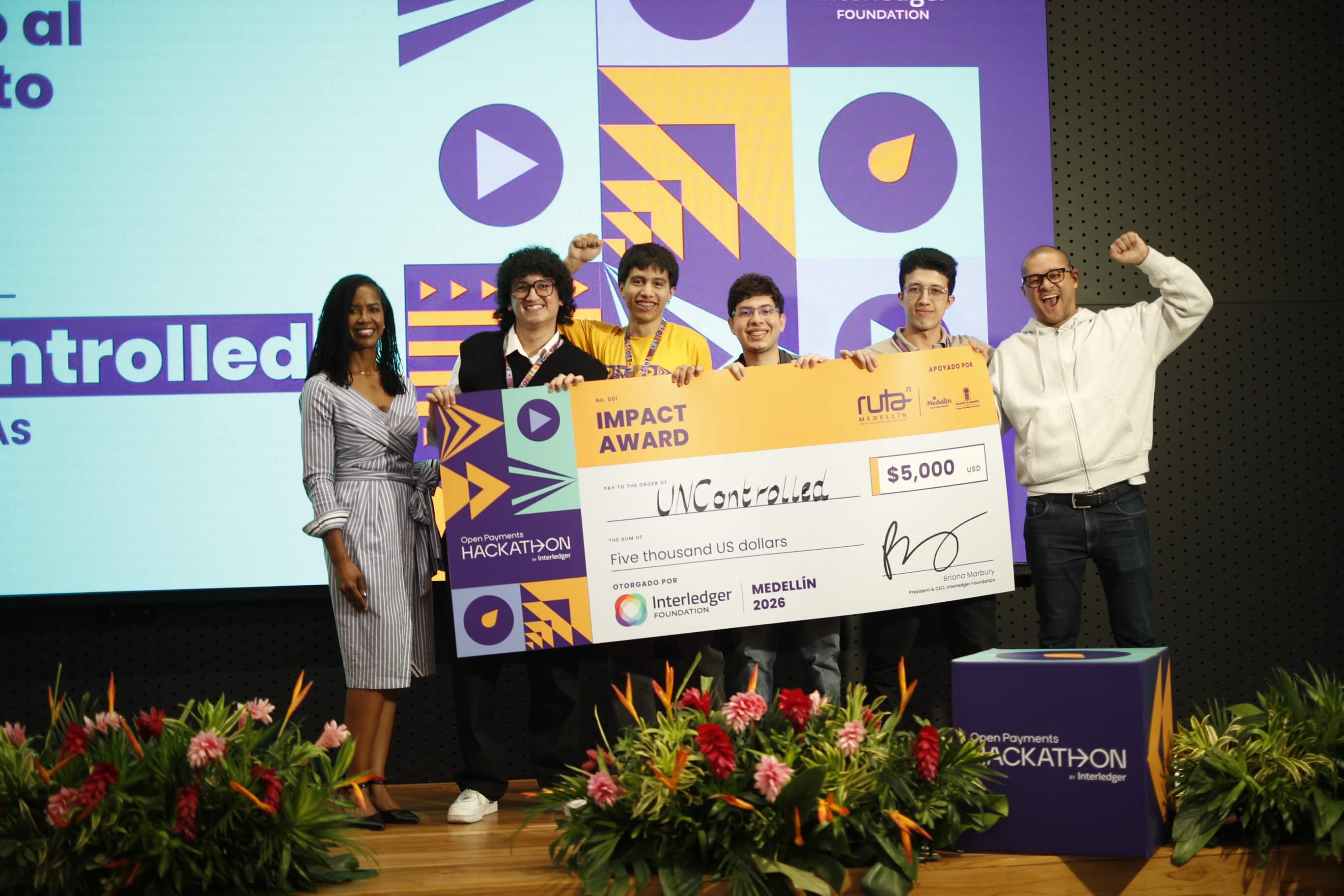
Impact Award winners: UNcontrolled
UNControlled built COMPAS, a remittance solution that lets senders set spending permissions to help ensure funds go toward their intended purpose.
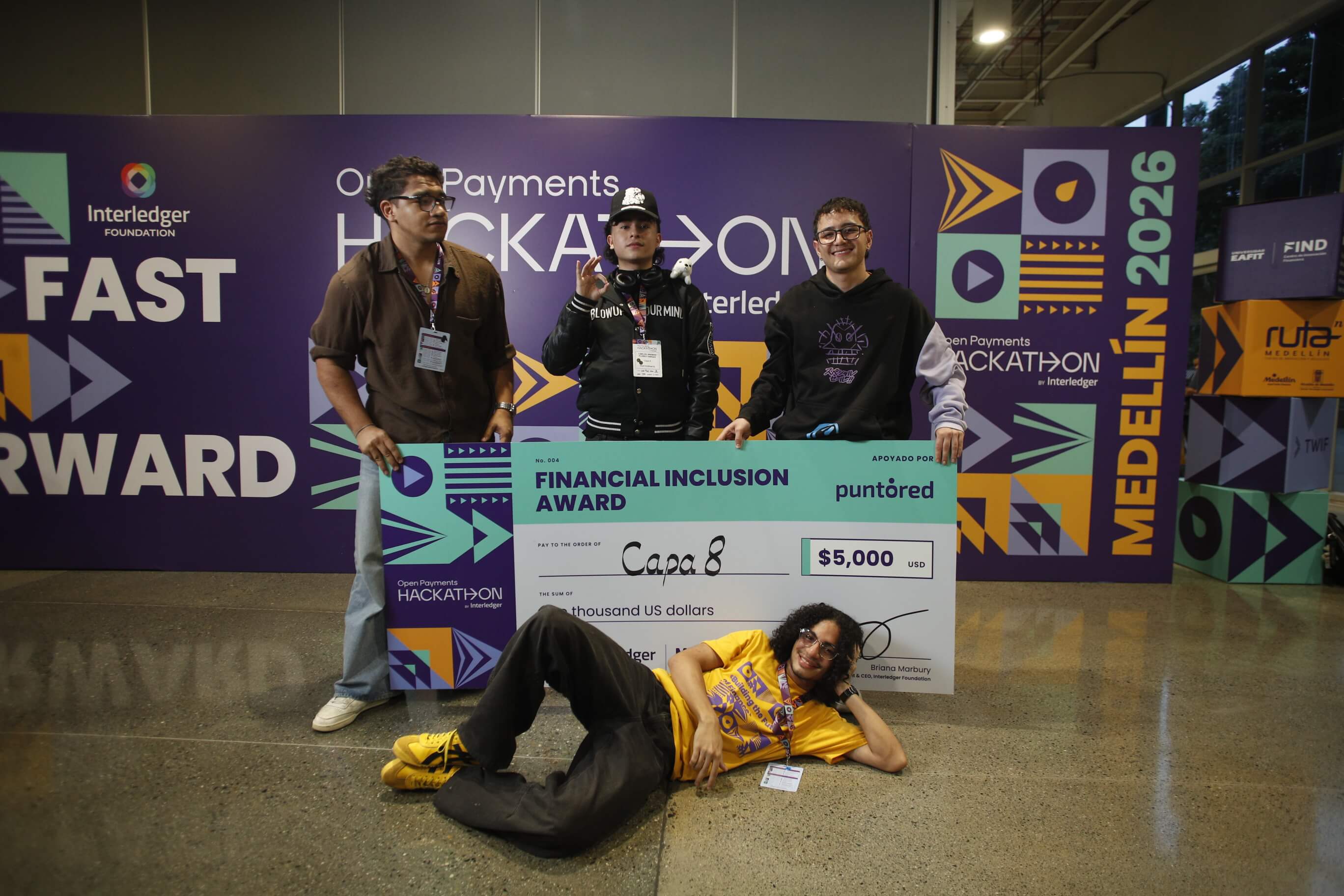
Inclusion Award winners: Capa 8
Capa 8 created Paygent, enabling families to make payments by SMS without internet access, an app, or a digital wallet.
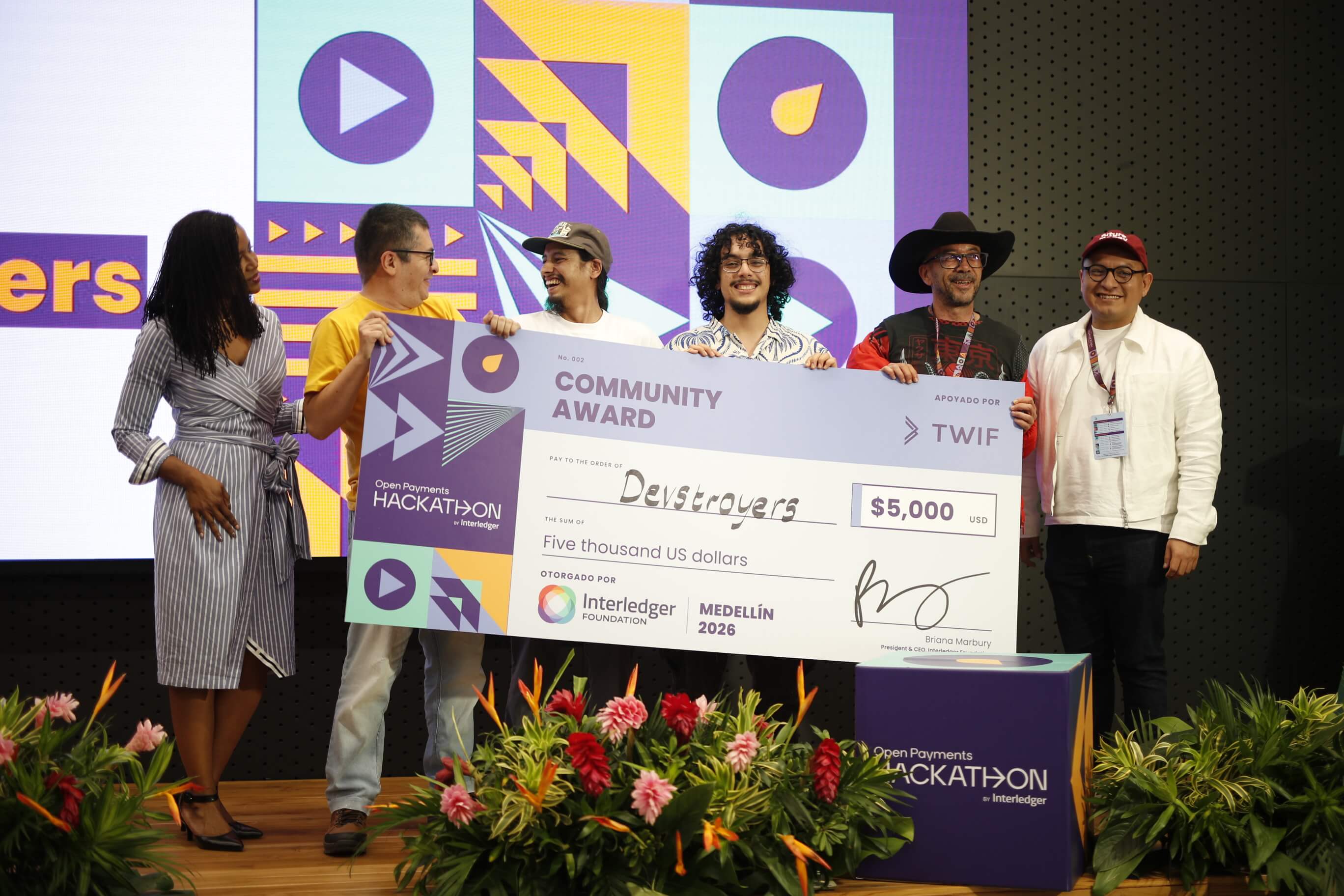
Community Award winners: Devstroyers
Devstroyers built Chasky, turning almost any phone, even a basic push-button handset, into a payment terminal through text messages.
More than a competition
The energy in the room was palpable, and teams cheered each other’s wins as loudly as their own. The Community award, voted for by every participant, captured that spirit best. It celebrates what Interledger is about: supporting each other to build solutions that make the financial system more open and beneficial for everyone in it.
That’s the real point of a hackathon. It isn’t just about winning. It’s about contributing to an open source community that builds together, for everyone. Ramón Escobar from This Week in Fintech highlighted the value of community for everyone who hadn’t won, supporting and advancing everyone’s ideas, and noted that the hackathon was just the start of that journey.
Just the beginning in Colombia
The hackathon caught the attention of national media, including a feature in El Economista (opens in a new tab). But for Interledger Foundation, it marks a starting point, not a finish line.
Colombia brings together something rare: a tightly connected ecosystem of private companies, the public sector and academia, set against one of the fastest rollouts of national payments infrastructure anywhere. That makes it the ideal place to grow financial products that truly build the future of finance, and we’re excited to keep building here.
Thank you to everyone who made this possible: our partners, participants, and the Interledger team, supported by our community mentors from MiPlata, People’s Clearinghouse, Puntored, and Fliqa.